For ages I've personally felt that influencing people was one of my weakest ares in need of development, so I was quite surprised when two senior managers independently commented that from their perspective I succeed in influencing people so disagreed with my own assessment. Reflecting on this I wonder if perhaps what they are seeing as 'influencing' is really my motivating people to achieve things in the short-term (which admittedly is a rather important trait for a project manager) and not 'influencing' at all.
I recently read an interesting article 'How to 10X Your Influence' by Joseph Grenny, David Maxfield, and Andrew Shimberg which was published in the MIT Sloan Management Review. They are from the same stable of Vital Smarts that produced the excellent 'Crucial Conversations' and 'Crucial Confrontations'. It outlines the results of some amazing research which identified 6 sources of influence and concluded that if strategies are applied using at least 4 of these sources, we can influence vital behaviours and achieve sustainable change.
That's the key thing for me... sustainable change. As a project manager I can introduce change, get people's buy-in, implement process and technology changes, and even effect some behaviour change during the lifetime of the project. What concerns me is that by it's very nature, a project has an end and the project manager moves on to other things. So - what happens then? I made it very clear in the presentation I gave when interviewed for my current role that in my view a project manager delivering within time, within scope, within budget, to the required quality does not represent project success because the actual benefits of a project come afterwards. Project success, to me anyway, is actually determined by the people who are expected to make use of the solution (whether it be a new process or technology or something else). If those people don't make the changes in behaviour - then the change will be fleeting and all the time and effort spent on the project could be a complete waste of time and energy. Yes, I know we learn things from the experience successful or otherwise- but in terms of making effective use of scarce resources etc. the argument stands.
This brings me back to the article again. I really like the model that the authors have produced as it is easy to grasp and very powerful. I picked up a copy of their book whilst at a masterclass session run by Graham Robb Associates on Wednesday morning (*makes mental note to say more about this in another post*). Entitled 'Influencer: The Power to Change Anything' and a NY Times Bestseller, it was named as business book of the year 2008 by Soundview. What's more interesting that the accolades is the stories - take a look at the videos on their website. I'm looking forward to reading it over the Easter holidays. If you want to have a peek yourself, the first chapter is available online.
Related posts:
Showing posts with label Personal Development. Show all posts
Showing posts with label Personal Development. Show all posts
Friday, 10 April 2009


Tuesday, 27 January 2009
Lessons learned from President Obama's Inauguration Speech
I don't know about the rest of you but I found last week to be an inspiring week with much cause for reflection. Witnessing the first african-american inaugurated as President of the United States is certainly one for the history books and therefore deserves a mention in this blog (I went home early to watch it live on TV). There is a lot one can take from his speech an I wanted to draw your attention to a couple of things that are relevant to this project.
- President Obama's message was very clear that each and every citizen has a responsibility to make a difference in order to bring about real change - "the price and the promise of citizenship".
This is true of projects too. Project organisations are temporary things setup purely to deliver a project. Once that is done - it's up to the guys on the ground as well as operational management to make it a success and achieve the potential benefits. Their continued efforts beyond the project is 'the price'; the potential benefits are 'the promise'.
- "Today I say to you that the challenges we face are real. They are serious and they are many. They will not be met easily or in a short span of time. But know this America: They will be met."
Some news channels reported the inauguration speech as being particularly grim in comparison to the campaign speeches. Well of course it was! Getting voted in is one thing and now he IS in he has to deliver. Elements throughout his speech clearly intended to set people's expectations to realistic levels whilst still retaining a message of hope for the future.
Throughout the projects I've worked on I have always been very enthusiastic about what will be delivered. I have learned the hard way of the real danger of my enthusiasm creating unrealistic expectations. Therefore I have made a conscious effort on the project I am currently managing to constantly state that we will be unable to deliver all that we would like to by target date. However what we will deliver will be the required elements and anything else is icing on the cake. There is nothing wrong with a dose of realism (as I have to remind myself sometimes ;) ).
Wednesday, 26 November 2008
Independence is finally mine... the imp can drive!
 I've always considered myself to be a pretty independent person in most areas of my life. However, there is one area in which I have been totally dependent upon others the past few decades of my life - getting from A to B by means of a car. Yes - all my solo adventures have been made with the use of my own two feet and public transport. Due to events the past few years I started thinking that perhaps I really should get my driving license. After all, as the nature of the job I want is likely to involve travel - how likely am I to be successful in an application without a driving license? A couple of years ago I cheekily asked if driving lessons counted as a 'training course' for my personal development plan - naturally the answer was 'no'. My attitude is I was no worse off for asking and they could have surprised me (so I'm an optimist).
This year I finally decided to take the plunge and started saving. It's an expensive business in the UK as there's a fair bit involved cost wise:
- Cost of a provisional driving licence (if you don't have one already): £50
- Insurance for a learner driver on the practice car
- Theory test: £30
- Practical test: £56.50
- Driving lessons: £20 to £26 per hour in my area
- Supplementary materials (e.g. DVD, Highway code): £25 for learner pack from DSA inc. L plates
- Free information: Lots of good stuff on the motoring pages of the Direct Gov website.
'I'm pleased to say you've passed.'
For anyone else out there in their mid-thirties and thinks it's too late to learn - think again. If I can do it - so can you!
Major thanks go to:
My partner: All your support, patience with manoeuvres and learning to trust my ability to stop the car.
My driving instructor - Dave Lewsey: Your patience with a perfectionist learner, willingness to translate concepts into something that worked for me (mantra: RLR, Rbs, Lbs, Bwdw) and your sense of humour - I loved lessons with you and no longer having them is the only downside of passing my test.
Sunday, 21 September 2008
Starting from scratch...
Well, this week marked the start of a new role for me. I'd always assumed that my next role would be that of a Service Delivery Manager - yet I have moved out of the operational IT environment and taken a leap into the business change environment. I'm now a project manager on the business side (albeit with an IT background). These days there is a lot of talk about how IT folk, CIOs especially, need to understand the business units that they support; what better way to do that than to take the plunge into said area? Inevitably there will be ups and downs to go with the new challenges. It all makes for the perfect personal development opportunity - and one that will get my career where I want it to go.
So... week one. My objectives were to get a better understanding of the project(s) that I would be working on, meeting key people (potential project team members and primary stakeholders), and an understanding of the new environment I'd be working in.
Monday - I go through the usual induction stuff and find that everything isn't quite as expected with my new room or IT setup. On the upside these small issues provided me with opportunities to get well acquainted with facilities and IT sooner than I had planned to. Everyone proved really helpful and focused on getting what I need to do the job. A positive day on the whole. The only negative thing was that, although intellectually I knew that it would be hard moving from IT to the business side, I hadn't reckoned on it being so damned frustrating to find myself a 'user' and all that means, i.e. subject to user IT policies and unable to do all I am used to doing!
Tuesday - Main achievement of the day, meeting and picking the brains of the Contact Centre Manager who will be a key stakeholder in the integration project. Obtained a wealth of information in a short time which all contributed to my weekly goals. Once I got home I was missing the people I used to work with and elements of my old job. Had to remind myself why I made the move and gear myself up for the next working day.
Wednesday - Very busy yet rewarding day. Introduced myself to the IT managers and met with every member of ICT who was present. Coming from IT myself, I know that without their support this project will be going nowhere fast. I also met a potential team member who specialises in process mapping. A skillset that I have some, yet limited, experience with so it's great to have someone around who is very passionate about the subject.
Thursday - At short notice I managed to meet the project customer (senior user) for a one-to-one prior to our formal meeting next week. Very informative and useful - yet another person with great energy and enthusiasm. Either there are a lot of those in this organisation or I've just been very lucky in meeting the few that are thus far - time will tell.
Friday - The first project board meeting with me present. My one deliverable to show for the week thus far is a draft project organisation chart identifying programme board, project board, project team members, stakeholders and other interested parties. The fact that I had met a lot of them helped. I spent the afternoon in the contact centre getting to grips with the various systems in use and how they are used in conjunction with one another. All very positive thus far - I go home tired and happy.
Conclusion after week one: Initial objectives achieved. Coming from an outside organisation I have no credibility here; I am starting from scratch. Spending time meeting people, making an excellent first impression, and gathering information about people and the organisation are all key if I am to be successful in this role. Being me, I intend to be ;)
So... week one. My objectives were to get a better understanding of the project(s) that I would be working on, meeting key people (potential project team members and primary stakeholders), and an understanding of the new environment I'd be working in.
Monday - I go through the usual induction stuff and find that everything isn't quite as expected with my new room or IT setup. On the upside these small issues provided me with opportunities to get well acquainted with facilities and IT sooner than I had planned to. Everyone proved really helpful and focused on getting what I need to do the job. A positive day on the whole. The only negative thing was that, although intellectually I knew that it would be hard moving from IT to the business side, I hadn't reckoned on it being so damned frustrating to find myself a 'user' and all that means, i.e. subject to user IT policies and unable to do all I am used to doing!
Tuesday - Main achievement of the day, meeting and picking the brains of the Contact Centre Manager who will be a key stakeholder in the integration project. Obtained a wealth of information in a short time which all contributed to my weekly goals. Once I got home I was missing the people I used to work with and elements of my old job. Had to remind myself why I made the move and gear myself up for the next working day.
Wednesday - Very busy yet rewarding day. Introduced myself to the IT managers and met with every member of ICT who was present. Coming from IT myself, I know that without their support this project will be going nowhere fast. I also met a potential team member who specialises in process mapping. A skillset that I have some, yet limited, experience with so it's great to have someone around who is very passionate about the subject.
Thursday - At short notice I managed to meet the project customer (senior user) for a one-to-one prior to our formal meeting next week. Very informative and useful - yet another person with great energy and enthusiasm. Either there are a lot of those in this organisation or I've just been very lucky in meeting the few that are thus far - time will tell.
Friday - The first project board meeting with me present. My one deliverable to show for the week thus far is a draft project organisation chart identifying programme board, project board, project team members, stakeholders and other interested parties. The fact that I had met a lot of them helped. I spent the afternoon in the contact centre getting to grips with the various systems in use and how they are used in conjunction with one another. All very positive thus far - I go home tired and happy.
Conclusion after week one: Initial objectives achieved. Coming from an outside organisation I have no credibility here; I am starting from scratch. Spending time meeting people, making an excellent first impression, and gathering information about people and the organisation are all key if I am to be successful in this role. Being me, I intend to be ;)
Friday, 8 August 2008
All change...
Due to some changes in real life I shall be updating on Wednesdays and Saturdays instead of Tuesdays and Fridays. That way, I really have no excuse not to post more regularly!
I recently applied for a new role and was successful so real life is somewhat busy for me at the moment as I deal with the transition. I am still working in local government with partnerships and shall be focused more upon project management and business transformation through IT for the foreseeable future instead of pure IT service management. No doubt, the nature of my future posts shall reflect this.
It's a wonderful opportunity to put some of that self-study for Prince 2 into practice on a larger scale than previously (although applied with a heavy dose of pragmatism!). No doubt there shall be challenges ahead and I'm looking forward to figuring out how to deal with them - hopefully coming out the other side unscathed!
I recently applied for a new role and was successful so real life is somewhat busy for me at the moment as I deal with the transition. I am still working in local government with partnerships and shall be focused more upon project management and business transformation through IT for the foreseeable future instead of pure IT service management. No doubt, the nature of my future posts shall reflect this.
It's a wonderful opportunity to put some of that self-study for Prince 2 into practice on a larger scale than previously (although applied with a heavy dose of pragmatism!). No doubt there shall be challenges ahead and I'm looking forward to figuring out how to deal with them - hopefully coming out the other side unscathed!
Thursday, 24 July 2008
Pssst... the 2008 edition of the PMBA is live!
I don't get a lot of time to just sit and read - I tend to have an average of three books on the go at any one time and most of that time they are books related to industry, business, and personal development. With so many books out there on various topics it's hard to know which ones to spend my valuable time on. I came across PMBA (Personal MBA) by Josh Kaufman awhile back and wanted to share it with you. It's fundamentally a reading list of 77 of the best business books currently in print. The premise is that you may not be able to afford a MBA course but you can borrow books from the library like Good Will Hunting and put what you read into practice.
The new 2008 list is now out. If you are already familiar with the previous list, check here for new additions. Personally I'm glad to see 'Presentation Zen' on there as I love the website and the reappearance of 'Getting Things Done' which I try to live by.
If you are feeling rich you can buy the "PMBA Complete Business Library". If you already have some of the books in the PMBA you can use the "Batch Book Buyer" to only select the ones you want.
Get out in the garden and enjoy a good read!
The new 2008 list is now out. If you are already familiar with the previous list, check here for new additions. Personally I'm glad to see 'Presentation Zen' on there as I love the website and the reappearance of 'Getting Things Done' which I try to live by.
If you are feeling rich you can buy the "PMBA Complete Business Library". If you already have some of the books in the PMBA you can use the "Batch Book Buyer" to only select the ones you want.
Get out in the garden and enjoy a good read!
Monday, 21 July 2008
Virtual Teams - where to start?
The answer is in an excellent blog that has been going since November 2007 yet I've only recently discovered it.
As they rightfully state:
Leading Virtually is well and truly on my subscription list; if you have an interest in virtual teams then I recommend you add it to yours!
As they rightfully state:
'Leaders of a virtual team face many challenges when leading a virtual team, including team building, motivating and developing team members from afar, rewarding team members even when they have no authority over their pay, and facilitating shared leadership and team learning. When virtual teams don’t succeed in meeting these challenges, they run over budget and miss important deadlines besides creating frustration and dissatisfaction among team members.'Their blog's mission is to help us learn about about virtual teams and what it takes to effectively lead them. Over the months their articles reflect their own experience as well as commentary upon scientific research. Subjects include virtual teams, leadership, collaboration, and computer-mediated communication (i.e., communication through email, instant messaging, discussion boards, video-conferencing, wikis, blogs, and virtual worlds).
Leading Virtually is well and truly on my subscription list; if you have an interest in virtual teams then I recommend you add it to yours!
Friday, 30 May 2008
Collaborative Working with Mind Manager
I am a huge fan of mindmapping on paper as well as and 'mindmapping' electronically using Mind Manager by Mindjet. A few weeks back I was pleased to get an invitation to try out 'Mind Manager Connect' - their solution to collaborative working.
I've had a bit of a play with some of my work colleagues and it would actually address some immediate issues for us. Due to the nature of partnership working we frequently waste time travelling between sites for meetings (although there is a lot to be said for face-to-face communication). The solution from Mindjet could enable us to be more effective (as well as helping to convert a few more people to the benefits of the tool ;) ). I did notice that it makes use of NetViewer for elements of the collaborative platform (why design something from scratch yourself when you can make use of another industry solution?).
The main issue I see at the moment is companies not necessarily wanting to have their data hosted on external servers (although this attitude is changing with so many SAAS software-as-a-service offerings nowadays). When I asked Mindjet about this, they did suggest that there would be an internal hosting option available, although not at release.
Anyhow, here is an extract from their FAQ to further whet your appetites:
Other reviews:
The Mind Mapping Software Weblog
CABRE - Applications of Mind Manager
I've had a bit of a play with some of my work colleagues and it would actually address some immediate issues for us. Due to the nature of partnership working we frequently waste time travelling between sites for meetings (although there is a lot to be said for face-to-face communication). The solution from Mindjet could enable us to be more effective (as well as helping to convert a few more people to the benefits of the tool ;) ). I did notice that it makes use of NetViewer for elements of the collaborative platform (why design something from scratch yourself when you can make use of another industry solution?).
The main issue I see at the moment is companies not necessarily wanting to have their data hosted on external servers (although this attitude is changing with so many SAAS software-as-a-service offerings nowadays). When I asked Mindjet about this, they did suggest that there would be an internal hosting option available, although not at release.
Anyhow, here is an extract from their FAQ to further whet your appetites:
What is Mindjet Connect?
Mindjet Connect helps individuals and teams to work faster and more effectively using a dynamic, flexible online environment.
Combined with MindManager Pro 7 SP2 Beta or MindManager Web (coming soon), Mindjet Connect organizes, simplifies and streamlines the way people interact and share information they need - through secure workspaces, real-time collaboration and web conferencing.
Mindjet Connect helps to establish the context captured in visual maps while providing a collaborative platform for sharing and contributing information in secure workspaces.
People can co-edit visual maps in real-time, chat and launch web conferencing to present maps and other documents. The result is a high performance workplace where teams can work more productively anytime or anywhere.
Back to Top
How can Mindjet Connect help me work more effectively in teams?
The speed of today’s business requires disparate teams to work together to accomplish more, faster. Mindjet Connect can help your team achieve more with every minute, and work together to accelerate success – productively.
Improve meeting efficiency
* Save time preparing for meetings by keeping all of your important files at your fingertips. Organize project workspaces with dynamic links to files so you always have the most up-to-date version.
* Get the right team members involved with an instant online meeting and collaborate with team members no matter where they are located.
* Brainstorm and Innovate. Enhance strategic thinking and facilitate quicker project planning by white boarding and co-editing visual maps with your team members, simultaneously. Your team can now share the same map and add topics, details, notes and attach file resources.
Manage projects to achieve more in less time
* Align objectives and actions, clearly. Create an environment where everyone can see and understand the relationship between themselves, resources and actions to the objectives of the project – helping achieve clarity and avoid wasted time.
* Foster participation and strategic thinking. Provide a common environment that makes it easy to capture and organize the best ideas, techniques and approaches to accomplish anything – with visual maps that are quickly understood and easily shared.
* Simplify and streamline business and interactive work processes – from one or two individuals to entire organizations.
Create context for information management
* Keep everyone on the same page by creating workspaces where Microsoft Office™ files and web content can be linked, stored and shared so everyone can access and use information more productively.
* Keep track of revisions and version history. Files can be checked out / checked in so everyone is on the same page, and fully up to date.
* Set access controls for who can be an owner, author or reader within a workspace.
Collaborate & communicate effectively
* Communicate in real-time with the ability to see who is online, view work being done by others on a map in real-time, and interact through a variety of online tools.
* Host web conferences to share any kind of file or application.
* Edit maps with your team members, simultaneously. Your team can share the same map and add topics, details, notes and attach file resources.
What are some of the notable features of Mindjet Connect Beta?
Co-editing visual maps - One of our most exciting new features. Co-editing allows multiple users on different computers in different locations to work on the same map at the same time. It’s true real-time collaboration over the Internet.
Instant Meeting - You can experience true virtual collaboration through the integration of web conferencing and white boarding sessions.
Secure Workspaces - Create new workspaces when you need them, for new projects, new teams and new clients. Then tailor your workspaces with access controls for invited members, locking and versioning of documents, integration with e-mail and importing of maps and secondary documents.
MindManager Web (coming soon, not available for beta) - Access your workspaces and collaborate anytime within a standard web browser. You’ll have access to your data, even when you aren’t at your own computer.
Other reviews:
The Mind Mapping Software Weblog
CABRE - Applications of Mind Manager
Monday, 4 February 2008
Presenting with Pictures
'A picture tells a thousand words', or so they say. I don't know about you but I am so tired of presentations that consist of powerpoint slides with bullet point text on them which the 'presenter' then goes on to read verbatim. What do we need the presenter for if they aren't going to add any value to the slides?
I saw a really good presentation at the itSMF conference (the only one I saw that wasn't of the above nature!) where the presenter used images to illustrate the story that he then told with the audience hanging onto every word. This is the sort of presentation I want to give!
Tomorrow I shall be attempting my first 'all picture' presentation which will force my audience to listen to what I'm saying as they won't have the luxury of reading about it on the screen. It's designed to simplify what is a complex topic so fingers crossed that I get my message across.
I saw a really good presentation at the itSMF conference (the only one I saw that wasn't of the above nature!) where the presenter used images to illustrate the story that he then told with the audience hanging onto every word. This is the sort of presentation I want to give!
Tomorrow I shall be attempting my first 'all picture' presentation which will force my audience to listen to what I'm saying as they won't have the luxury of reading about it on the screen. It's designed to simplify what is a complex topic so fingers crossed that I get my message across.
Monday, 17 December 2007
Are you a Zapper or a Sapper?

I've seen a couple of recommendations for 'Zapp! The Lightning of Empowerment' by William Byham with Jeff Cox and thought I'd give it a read (1999 2nd edition). Normally I dislike fable-style business books and prefer something with a little more meat to them. However, in this case, I am glad I made an exception. It's a very quick read and is as relevant today as it was back in the eighties. Much of the content is what we recognise as good common sense leadership and effective management - yet recognising it in our own workplaces is that bit harder.
One of the employees goes behind his supervisor's back and creates the 'Ralpholater' which transports he (and eventually his supervisor) to the 12th dimension which is a fantasy world version of the real world where fighting fires is really fighting the fires made by dragons, the manager is a huge green troll, etc. This appealed to the fantasy fan in me so I kept reading.
Using this contraption they identify two concepts: Zapp and Sapp.
The remainder of the book is spent figuring out what zapps, what sapps, how to zapp, and how to avoid sapping. The approach shows what is being done incorrectly then suggests an alternative approach to turn sapp into zapp. Useful at reinforcing those common sense messages.
Zapping is a 4 step process as follows:
1. Maintain or enhance self-esteem
2. Listen and respond with empathy
3. Share thoughts, feelings, and rationale
4. Ask for help and encourage involvement (Seek ideas, suggestions, and information)
These help you achieve the soul of zapp which is 'providing support without removing responsibility for action.'
The book goes on to reinforce the importance of support, feedback, coaching, and delegation. In many ways it made me think of the podcasts from Manager Tools which espouse the same key messages about changing behaviour to achieve results. Nip down to your local library or pick up a copy from Amazon - it's worth an evening of your time :)
Wednesday, 7 November 2007
Dream, Think, Act!
For awhile there I forgot that my blog is also about personal development but today I was reminded that there's more to life than IT Service Management (hard to believe, but there you have it!
I came across an inspirational blog, the content of which is consistent with the things I like at sites such as Manager Tools and Mind Tools, i.e. Clear, practical, effective advice for personal development. It's called 'Dream, Think, Act' by Edith Yeung.
Among the many posts that picqued my interest was one about PCS - Personal Credibility Score. Credibility is crucial to my personal brand, particularly in the workplace.
Her post covers the following key points:
First Impressions
Maintaining Your Creditability
Take 5 minutes to read the full article, you'll be glad you did!
I came across an inspirational blog, the content of which is consistent with the things I like at sites such as Manager Tools and Mind Tools, i.e. Clear, practical, effective advice for personal development. It's called 'Dream, Think, Act' by Edith Yeung.
Among the many posts that picqued my interest was one about PCS - Personal Credibility Score. Credibility is crucial to my personal brand, particularly in the workplace.
Her post covers the following key points:
First Impressions
- Confident
- Approachable
- Articulated
- Clean
- Punctual
- Authentic
- Available
- Passionate
- Under Promise Over Deliver
- Honesty
Maintaining Your Creditability
- Consistent
- Say No
Take 5 minutes to read the full article, you'll be glad you did!
Saturday, 14 April 2007
Mind Tools - Kickstart your career
I've been a fan of the work that has been going on over a Mind Tools for many years now and when they launched their 'Career Excellence Club' I had to register to check it out and see whether it would be worth the monthly fee. After 6 months the answer in my view is 'yes'. Being a member gives you access to premium versions of the tools (problem solving, decision making, team leading, etc.), book insights, interviews, etc. The community forums are excellent as members support one another, stimulate new ideas, provide new slants on old ones, motivate one another, etc. It really is one of the best communities out there to my mind for anyone serious about taking a structured approach (or not) to personal development.
The monthly fee is worth it for the weekly Bite Sized Training booklets (usually around 15-20 pages) designed to be worked through within an hour's lunch break that take you through a tool in detail , e.g. providing feedback.
No, I'm not on commission - but perhaps I should be ;)
The monthly fee is worth it for the weekly Bite Sized Training booklets (usually around 15-20 pages) designed to be worked through within an hour's lunch break that take you through a tool in detail , e.g. providing feedback.
No, I'm not on commission - but perhaps I should be ;)
Tuesday, 3 April 2007
On Opportunity
Warning: non-ITIL related reflective post today to match my mood!
What do you do when you are at a crossroads and there is no right or wrong choice, yet one potentially leads to the dark side of the force? How do you decide?
There are lots of useful tools over on Mind Tools to help you with decision making beyond the standard 'Pros vs Cons'.
In my case, today, I chose what I hope is the light. My tool of choice? My gut instinct. I've always been a believer in not simply grabbing opportunities as they arise, but CREATING opportunities for yourself. However, sometimes it is necessary to pass up an opportunity, even one a year in the making, to stay true to yourself. Although hard, remember those old chestnuts:
'Whilst one door closes, another is opening.'
'If opportunity doesn't exist; build a door ...'
'Learn to listen. Opportunity sometimes knocks very softly.' H. Jackson Brown, Jr.
Today I go forward holding fast to the belief that:
'Luck is a matter of preparation meeting opportunity.'
I am preparing...
What do you do when you are at a crossroads and there is no right or wrong choice, yet one potentially leads to the dark side of the force? How do you decide?
There are lots of useful tools over on Mind Tools to help you with decision making beyond the standard 'Pros vs Cons'.
In my case, today, I chose what I hope is the light. My tool of choice? My gut instinct. I've always been a believer in not simply grabbing opportunities as they arise, but CREATING opportunities for yourself. However, sometimes it is necessary to pass up an opportunity, even one a year in the making, to stay true to yourself. Although hard, remember those old chestnuts:
'Whilst one door closes, another is opening.'
'If opportunity doesn't exist; build a door ...'
'Learn to listen. Opportunity sometimes knocks very softly.' H. Jackson Brown, Jr.
Today I go forward holding fast to the belief that:
'Luck is a matter of preparation meeting opportunity.'
I am preparing...
Tuesday, 20 March 2007
Overworked? Don't complain, do something about it!

This is a short post because I'm working an awful lot of hours right now. Rather than complaining about my workload, over the past few months I have been taking steps to improve things by providing my line management with potential alternatives and encouraging them to prioritise work rather than expecting me to deliver on everything. I have to keep reminding myself it is not physically possible if I want to actually have a life. Today I came across an article on CIO.com ('How to talk to your boss about being overworked') which reiterated the same approach I've been taking and thought I'd share it with some of you who may be in the same boat.
Tuesday, 13 March 2007
Crucial Conversations - buy it, read it, do it!
Given the publication date of 2002 I'm late to the fold on this one, but I found reference to 'Crucial Conversations: Tools for talking when stakes are high' whilst reading a report called 'Silence Fails: The Five Crucial Conversations for Flawless Execution' and thought it would be worth a read. It was.
Fundamentally the book teaches you how to:
1. Recognise a crucial conversation - "A discussion between two or more people where stakes are high, opinions vary, and emotions run strong." (Get Unstuck)
2. How to analyse what is happening (Start with the Heart, Learn to look)
3. What to do about it (Make it Safe, Master my Stories, STATE My Path, Explore Others' Paths, Move To Action)
This is then summarised as a visual 'dialogue model' at the end of the book (which makes much more sense if you've actually read the book first!).
The style of the authors is an easy going conversational one which makes for quick reading. However, it's one of those books that you absolutely have to absorb, practice, go back and re-read, practice, etc. There are also supplementary materials (videos, self-assessment questionnaires, group questions) available on the vitalsmarts website if you register.
Much of what they say resonates for me with that which Mark and Mike teaching over on the Manager Tools podcast series.
If, like me, sometimes you get in a mess in a crucial conversation - then get this book and practice what it preaches. I certainly will.
Fundamentally the book teaches you how to:
1. Recognise a crucial conversation - "A discussion between two or more people where stakes are high, opinions vary, and emotions run strong." (Get Unstuck)
2. How to analyse what is happening (Start with the Heart, Learn to look)
3. What to do about it (Make it Safe, Master my Stories, STATE My Path, Explore Others' Paths, Move To Action)
This is then summarised as a visual 'dialogue model' at the end of the book (which makes much more sense if you've actually read the book first!).
The style of the authors is an easy going conversational one which makes for quick reading. However, it's one of those books that you absolutely have to absorb, practice, go back and re-read, practice, etc. There are also supplementary materials (videos, self-assessment questionnaires, group questions) available on the vitalsmarts website if you register.
Much of what they say resonates for me with that which Mark and Mike teaching over on the Manager Tools podcast series.
If, like me, sometimes you get in a mess in a crucial conversation - then get this book and practice what it preaches. I certainly will.
Tuesday, 7 November 2006
E-mails - distraction or effective tool?
I don't know about you, but I suffer from e-mail distraction. I find it hard to restrict myself to checking for new mail at one point in the morning, and another in the afternoon; especially if I'm expecting a response to something 'important' - so I leave the notification alert turned on (a time-management no-no).
Today's post is about the effective use of e-mail. All too often it is easy for us to send an e-mail which in some cases can be used to avoid potentially uncomfortable situations (so it becomes a safety blanket), to be more informal and say something that you perhaps might not say to some one's face, etc. These aren't good reasons and they are not as effective in terms of building and maintaining relationships with people as face-to-fact contact is. Over the past year I've made a conscious effort to send less (and more concise) e-mails and increase face-to-face/phone contact. Without question I have developed working relationships that are better for it.
For example, a colleague sent an e-mail asking who could attend a work social evening and received just a handful of replies. However, when they got up from their desk and spoke one-on-one with people, they were willing to say, 'Yes, I'll come along'.
With people copying all and sundry on e-mails, we suffer from e-mail overload and it is very easy to scan something and intend to deal with it later. If someone is face to face (or even on the telephone) it is frequently easier to get a result, i.e. more effective.
So next time you send an e-mail, stop, think, and get off your chair or pick up the phone. Try making e-mail the last thing instead of the first, the results may just surprise you.
If you have a few minutes, take a look at the following resources:
E-mail round up by Particle Tree
Manager Tools Podcast if you manage your own e-mail
Manager Tools Podcast if you have an admin managing your e-mail
Pick up a copy of 'Getting Things Done' by Dave Allen, if you can get the habit then it will make quite the difference. For reference, I've got a long way to go!
Today's post is about the effective use of e-mail. All too often it is easy for us to send an e-mail which in some cases can be used to avoid potentially uncomfortable situations (so it becomes a safety blanket), to be more informal and say something that you perhaps might not say to some one's face, etc. These aren't good reasons and they are not as effective in terms of building and maintaining relationships with people as face-to-fact contact is. Over the past year I've made a conscious effort to send less (and more concise) e-mails and increase face-to-face/phone contact. Without question I have developed working relationships that are better for it.
For example, a colleague sent an e-mail asking who could attend a work social evening and received just a handful of replies. However, when they got up from their desk and spoke one-on-one with people, they were willing to say, 'Yes, I'll come along'.
With people copying all and sundry on e-mails, we suffer from e-mail overload and it is very easy to scan something and intend to deal with it later. If someone is face to face (or even on the telephone) it is frequently easier to get a result, i.e. more effective.
So next time you send an e-mail, stop, think, and get off your chair or pick up the phone. Try making e-mail the last thing instead of the first, the results may just surprise you.
If you have a few minutes, take a look at the following resources:
E-mail round up by Particle Tree
Manager Tools Podcast if you manage your own e-mail
Manager Tools Podcast if you have an admin managing your e-mail
Pick up a copy of 'Getting Things Done' by Dave Allen, if you can get the habit then it will make quite the difference. For reference, I've got a long way to go!
Monday, 23 October 2006
Unresolved Help Desk Calls + Motivation = Change? (part 4)
This is the final part (for now) in my mini-series on motivating a team to resolve help desk calls when they have lots of other (to them more interesting) work to be doing as well.
After the meeting back in the office, I set the jars up and got back to work. In the background I heard a lot of people on the telephone, and wait, someone taking a sweet already AND putting it in the Eat Me jar for everyone? Curious, I had a chat with my colleague and it turns out that they are concerned about their teeth. Yet, the scheme still works for them because as more sweets arrive in the Eat Me jar; it's a visible representation of how many calls they are resolving. An unexpected benefit because I was convinced that everyone would be selfish and eat their sweets unless there wasn't one they liked left in the jar!
Turning my attention to another colleague who had missed the meeting, I quickly explained that when they resolve a call they can take a sweet and eat it or put it in the jar. Their response: "I don't do gimmicks." I said that was fair enough. Later on they raised the point that if they didn't join in the numbers would be wrong; so I explained the sweetie stock take on Friday's in my own time after work which may or may not have had an effect. I figured it would take about a week for them to come around. I was wrong. After lunch, they got up and headed to the jars... there had been so much banter in the office about the sweets and who has done what and which sweet was taken, I think perhaps they didn't want to feel left out. I love it when a plan comes together!
A week on...the overall backlog has decreased by 40 calls (of course there are other factors that contribute to this such as less staff on holiday, less calls being logged during the week etc.)
Two weeks on...the overall backlog has increased again due in part to an unusually high number of calls being logged, staff out on training courses, and others on holiday.
Staff are using the jars, albeit in different ways. Some continue to use them as intended; others prefer to keep a note of how many calls they are resolving throughout the working day and take their sweets out of the jars at the end of the day. The key thing that this scheme has achieved is an interest in HOW we are performing which was previously low to lacking.
The next stage to enhance this will be some 'no cost to the council' way of rewarding staff for calls resolved within time on a monthly basis.
After the meeting back in the office, I set the jars up and got back to work. In the background I heard a lot of people on the telephone, and wait, someone taking a sweet already AND putting it in the Eat Me jar for everyone? Curious, I had a chat with my colleague and it turns out that they are concerned about their teeth. Yet, the scheme still works for them because as more sweets arrive in the Eat Me jar; it's a visible representation of how many calls they are resolving. An unexpected benefit because I was convinced that everyone would be selfish and eat their sweets unless there wasn't one they liked left in the jar!
Turning my attention to another colleague who had missed the meeting, I quickly explained that when they resolve a call they can take a sweet and eat it or put it in the jar. Their response: "I don't do gimmicks." I said that was fair enough. Later on they raised the point that if they didn't join in the numbers would be wrong; so I explained the sweetie stock take on Friday's in my own time after work which may or may not have had an effect. I figured it would take about a week for them to come around. I was wrong. After lunch, they got up and headed to the jars... there had been so much banter in the office about the sweets and who has done what and which sweet was taken, I think perhaps they didn't want to feel left out. I love it when a plan comes together!
A week on...the overall backlog has decreased by 40 calls (of course there are other factors that contribute to this such as less staff on holiday, less calls being logged during the week etc.)
Two weeks on...the overall backlog has increased again due in part to an unusually high number of calls being logged, staff out on training courses, and others on holiday.
Staff are using the jars, albeit in different ways. Some continue to use them as intended; others prefer to keep a note of how many calls they are resolving throughout the working day and take their sweets out of the jars at the end of the day. The key thing that this scheme has achieved is an interest in HOW we are performing which was previously low to lacking.
The next stage to enhance this will be some 'no cost to the council' way of rewarding staff for calls resolved within time on a monthly basis.
Friday, 13 October 2006
Unresolved Help Desk Calls + Motivation = Change? (part 3)
I agreed with the team leaders to present the idea at a team briefing. With the date set, the night before I ran the help desk report to show the number of outstanding calls on each work queue and spent part of my evening counting out and dividing hundreds of sweets into the various jars (each representing one work queue).
As I was doing this, I realised that although the jars are needed for operational purposes, it did detract somewhat from the shock factor of a huge pile of sweets. I've learned from Spendaholics (TV show) and John Kotter's 'The Heart of Change' that the tangible shock factor is all important to evoke the feeling which would hopefully lead to the change (I know he was talking about large organisational change, but I figure it could work for us too on a small scale).
So, I delved into the sweetie stockpile and started out counting sweets again equal to the number of outstanding calls. These I divided into plastic bags.
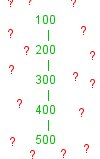 The next morning arrived, and I went in early to prepare the room. Jars laid out on a table and covered out of sight, the sweetie pile bags also hidden away, last months calls resolved within time stats and this month to date written on a white board, and another white board with numbers from 100-500 on it.
Once everyone had arrived I outlined the current situation regarding the increasing backlog with help desk calls and the people resources available. Next I turned to the whiteboard with the numbers 100-500 on it and asked everyone for their guess as to the number of outstanding calls. This led to a nice bit of banter whilst everyone submitted their thoughts which ranged from just over 300 to over 700! A nice indication that no one really knew. I circled those that came closest to the actual number and wrote it on the board for all to see (slight pause for it to sink in).
Next I said that at the end of the day it's just a number, and it's hard to grasp what that really means. At which point I delved into my shopping bag and pulled out first one plastic bag and handed it to a colleague to tip out into the middle of the table (I should say that we were all sat around a circular table which left a perfect circle in the middle for this exercise). The grins started to appear, and one person leaped ahead and said, "Oh, I bet we get a sweet for each call we close!" I grinned and handed out another bag. "I bet there's a hundred in each bag..." they said. Smiling, I handed out more bags to different people so about half of the team were hands-on.
When all the sweets were on the table, I stated the outstanding call number again and that each sweet didn't represent a call, but it represented someone waiting on us to complete their call (a slight mental shift as I was trying to encourage the customer-focused way of thinking).
As hands began to rummage through the sweets to see what was there I talked a bit about the process, then revealed the jars and went through each one showing the number of calls outstanding for that queue. This seemed to further reinforce the shock factor as in one case multiple people didn't realise there were any calls on one queue at all!
I fielded a number of questions, one of which was, "Is the council paying for this?" The answer was "No." In discussion with the team leaders we had agreed to split the initial and ongoing sweet cost 3 ways (I'm happy to pay for the jars as it was my idea, and if it fails then I get something out of it anyway). There was a split-second of silence as people took this in, then a number said "Thank you for doing this." I'm hoping that because we are willing to invest personal money and time, everyone will be that much more inclined to make the idea work.
I have to say that I was pleasantly surprised that everyone present was smiling and up for the idea. I'd been prepared for the cynics. However, the real test would be when we were back in the office. Find out what happens in part 4 next Tuesday as that will mark 1 week of the new initiative.
As I was doing this, I realised that although the jars are needed for operational purposes, it did detract somewhat from the shock factor of a huge pile of sweets. I've learned from Spendaholics (TV show) and John Kotter's 'The Heart of Change' that the tangible shock factor is all important to evoke the feeling which would hopefully lead to the change (I know he was talking about large organisational change, but I figure it could work for us too on a small scale).
So, I delved into the sweetie stockpile and started out counting sweets again equal to the number of outstanding calls. These I divided into plastic bags.
 The next morning arrived, and I went in early to prepare the room. Jars laid out on a table and covered out of sight, the sweetie pile bags also hidden away, last months calls resolved within time stats and this month to date written on a white board, and another white board with numbers from 100-500 on it.
Once everyone had arrived I outlined the current situation regarding the increasing backlog with help desk calls and the people resources available. Next I turned to the whiteboard with the numbers 100-500 on it and asked everyone for their guess as to the number of outstanding calls. This led to a nice bit of banter whilst everyone submitted their thoughts which ranged from just over 300 to over 700! A nice indication that no one really knew. I circled those that came closest to the actual number and wrote it on the board for all to see (slight pause for it to sink in).
Next I said that at the end of the day it's just a number, and it's hard to grasp what that really means. At which point I delved into my shopping bag and pulled out first one plastic bag and handed it to a colleague to tip out into the middle of the table (I should say that we were all sat around a circular table which left a perfect circle in the middle for this exercise). The grins started to appear, and one person leaped ahead and said, "Oh, I bet we get a sweet for each call we close!" I grinned and handed out another bag. "I bet there's a hundred in each bag..." they said. Smiling, I handed out more bags to different people so about half of the team were hands-on.
When all the sweets were on the table, I stated the outstanding call number again and that each sweet didn't represent a call, but it represented someone waiting on us to complete their call (a slight mental shift as I was trying to encourage the customer-focused way of thinking).
As hands began to rummage through the sweets to see what was there I talked a bit about the process, then revealed the jars and went through each one showing the number of calls outstanding for that queue. This seemed to further reinforce the shock factor as in one case multiple people didn't realise there were any calls on one queue at all!
I fielded a number of questions, one of which was, "Is the council paying for this?" The answer was "No." In discussion with the team leaders we had agreed to split the initial and ongoing sweet cost 3 ways (I'm happy to pay for the jars as it was my idea, and if it fails then I get something out of it anyway). There was a split-second of silence as people took this in, then a number said "Thank you for doing this." I'm hoping that because we are willing to invest personal money and time, everyone will be that much more inclined to make the idea work.
I have to say that I was pleasantly surprised that everyone present was smiling and up for the idea. I'd been prepared for the cynics. However, the real test would be when we were back in the office. Find out what happens in part 4 next Tuesday as that will mark 1 week of the new initiative.
Tuesday, 10 October 2006
Unresolved Help Desk Calls + Motivation = Change? (part 2)
Following on from yesterday and my revelation...
My colleagues needed to SEE the backlog. A long list or number on a report just doesn't cut it. I needed something tangible; something to shock; something that could inspire change... and ooh, something that might be motivating in and of itself.
Enter: sweets. Hundreds of them!
The 3-step process I came up with works like this:
1. Allocate a sweetie jar for each work queue with each sweet in the jar representing someone who is waiting on us to complete their incident/service request.
2. When someone resolves a call, they get to take a sweet from the correct queue jar and either eat it, or put it into the shared 'Eat Me! (available sweets) jar.
3. After work each Friday I take on the role of 'sweetie monitor' and top up each jar with the new calls for the week and check the count of each jar to ensure people are taking their sweets/not taking too many!
The following day I sounded out the IT team leaders and was pleasantly surprised to find that neither of them laughed at me. They actually leaned back and said, "That could work..." So, with the authorisation to go ahead I went shopping!
I made sure that I purchased a wide range of sweets with wrappers so they could withstand the rummaging, as well as checking best before dates because some of our calls have been outstanding for a rather long time.
Finding the right style of sweetie jar took a little effort but I found some and had to wait for a week whilst they ordered more to make up the numbers I needed.
With the jars and sweetie stock at the ready, I had to figure out how to present the idea to the team in such a way that they'd support it instead of dismissing it as 'one of her crazy schemes'. I'll save this part for Friday's entry. See you then.
My colleagues needed to SEE the backlog. A long list or number on a report just doesn't cut it. I needed something tangible; something to shock; something that could inspire change... and ooh, something that might be motivating in and of itself.
Enter: sweets. Hundreds of them!
The 3-step process I came up with works like this:
1. Allocate a sweetie jar for each work queue with each sweet in the jar representing someone who is waiting on us to complete their incident/service request.
2. When someone resolves a call, they get to take a sweet from the correct queue jar and either eat it, or put it into the shared 'Eat Me! (available sweets) jar.
3. After work each Friday I take on the role of 'sweetie monitor' and top up each jar with the new calls for the week and check the count of each jar to ensure people are taking their sweets/not taking too many!
The following day I sounded out the IT team leaders and was pleasantly surprised to find that neither of them laughed at me. They actually leaned back and said, "That could work..." So, with the authorisation to go ahead I went shopping!
I made sure that I purchased a wide range of sweets with wrappers so they could withstand the rummaging, as well as checking best before dates because some of our calls have been outstanding for a rather long time.
Finding the right style of sweetie jar took a little effort but I found some and had to wait for a week whilst they ordered more to make up the numbers I needed.
With the jars and sweetie stock at the ready, I had to figure out how to present the idea to the team in such a way that they'd support it instead of dismissing it as 'one of her crazy schemes'. I'll save this part for Friday's entry. See you then.
Unresolved Help Desk Calls + Motivation = Change? (part 1)
No, I've not gone mad (always been that way)... Today I wanted to write about an idea I had that has today moved from theory into practice.
A little background. We don't have enough staff working in the IT department at my council. We're constantly wrestling with trying to balance project work, helpdesk calls, systems maintenance, and other corporate administrative duties that we may have. Since Gershon's Efficiency Review people (i.e. senior management) have looked to save money from all areas INCLUDING IT, instead of recognising that IT requires investment to help alleviate issues in other areas; but now I am digressing... back to prioritisation. It's tough. When the balance is tipped and you get to a stage where most of the help desk calls have breached the internally accepted SLA priority and the backlog is increasing instead of decreasing, it inevitably leads to a pretty demotivated team.
So... the big question that needed to be answered - what could I do in my non-management capacity to improve things for users, my colleagues, and myself? I should add a small proviso: 'given the restricted resources available'.
I don't know if any of you have seen Spendaholics or Supernanny on TV recently - but I watch them both with interest as I find them excellent lessons in the people side of change management (something I'm keen to develop). (Unlike, I might add, 'How Clean is your House' which I watch to reassure myself that I do some housework ;) ) One night, whilst drifting off to sleep, the solution hit me... slap bang in the forehead.
To find out what hit me in the forehead, see me tomorrow!
A little background. We don't have enough staff working in the IT department at my council. We're constantly wrestling with trying to balance project work, helpdesk calls, systems maintenance, and other corporate administrative duties that we may have. Since Gershon's Efficiency Review people (i.e. senior management) have looked to save money from all areas INCLUDING IT, instead of recognising that IT requires investment to help alleviate issues in other areas; but now I am digressing... back to prioritisation. It's tough. When the balance is tipped and you get to a stage where most of the help desk calls have breached the internally accepted SLA priority and the backlog is increasing instead of decreasing, it inevitably leads to a pretty demotivated team.
So... the big question that needed to be answered - what could I do in my non-management capacity to improve things for users, my colleagues, and myself? I should add a small proviso: 'given the restricted resources available'.
I don't know if any of you have seen Spendaholics or Supernanny on TV recently - but I watch them both with interest as I find them excellent lessons in the people side of change management (something I'm keen to develop). (Unlike, I might add, 'How Clean is your House' which I watch to reassure myself that I do some housework ;) ) One night, whilst drifting off to sleep, the solution hit me... slap bang in the forehead.
To find out what hit me in the forehead, see me tomorrow!
Subscribe to:
Posts (Atom)


 Posts
Posts


